Look at any LinkedIn outbound tool's reply-rate benchmark. They quote 1–3% on cold InMail. LinkedIn's own Sales Navigator product reports a 15% industry-average InMail acceptance rate; the operator-voice pools we run sit at 38% on the same metric.
That's not the ceiling of the channel. That's the ceiling of the message reaching a profile that has nothing on it.
When somebody gets your DM, they don't read the message first. They click your name, see your headline, scan your recent posts, look at your network, and then decide whether to read your message.
If your profile is a sales rep with three lifestyle posts from six months ago, the message is dead before it's read.
Quick answer
Cold LinkedIn InMails convert at 1-3% because the profile behind them is empty. When a prospect clicks your name, they see the headline, recent posts and network before reading the DM. Operator profiles running three modules in parallel (~15 long-form posts a month, ~5 daily category-CEO comments, ~25 weekly contextual outreach touches) hit 15-20% reply rates in regulated B2B. The lever is profile credibility, not better copy.
What "full cycle" means
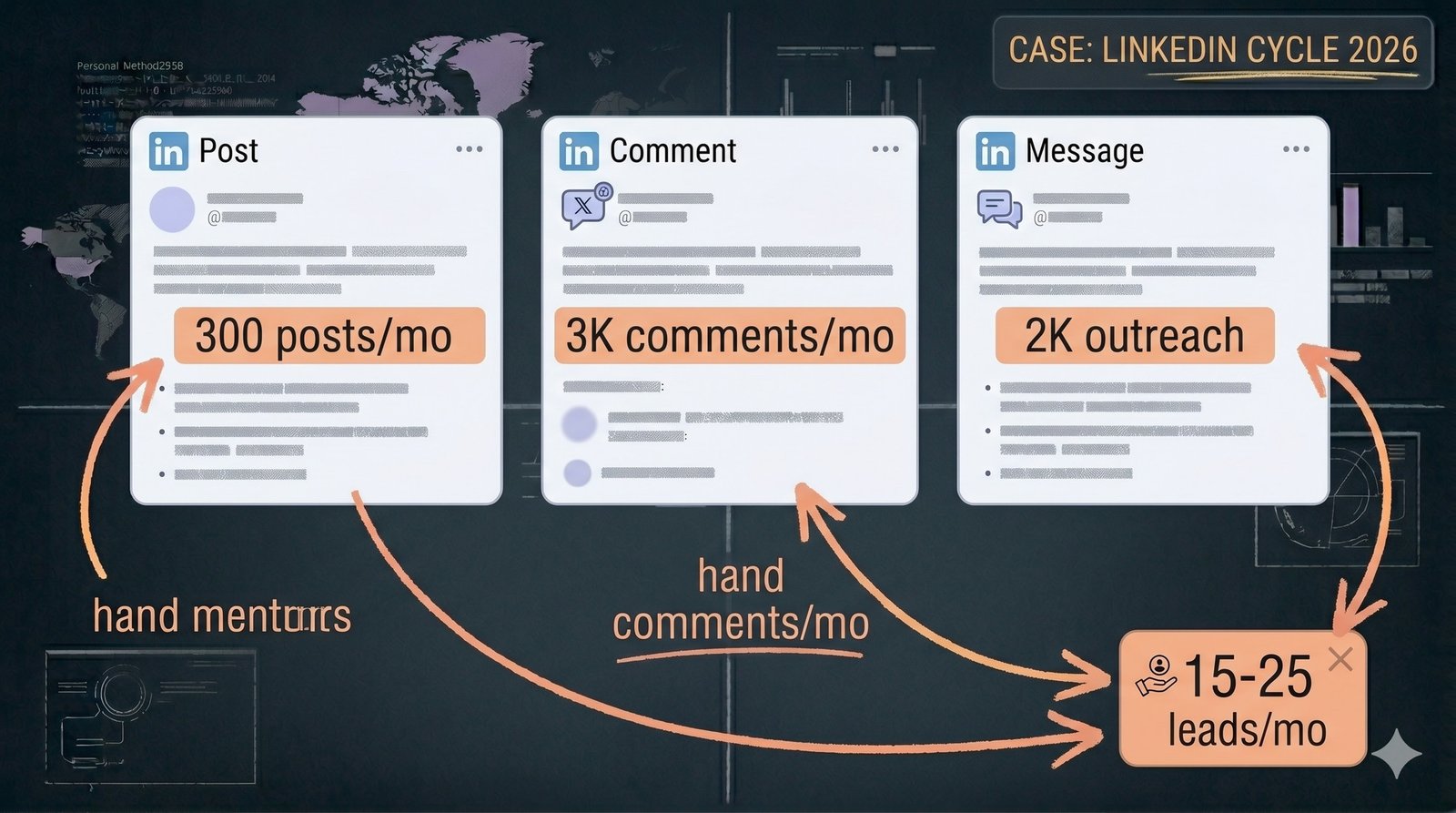
We run three modules in parallel for every LinkedIn resident:
Content , ~15 long-form posts per month per resident. Operator-voice. Settlement breakdowns. Treasury post-mortems. Niche analysis that the resident's network actually saves and forwards.
Comments , ~5 per day per resident under category CEOs and CTOs. Real-context insight, not "great post!" emoji. The resident shows up in the feed your ICP already reads.
Outreach , ~25 connection requests and InMails per week per resident. Contextual, not templated. The DM lands in an inbox where the prospect can click the profile and see months of substance.
The first two modules don't generate leads directly. They legitimise the third one. When a Head of Treasury at a Series C fintech gets your InMail, they click the profile and see: "VP Engineering, settlement infrastructure background, published 12 long-form posts this quarter, 800 followers in fintech." The DM is read. Often the DM is replied to.
This is the conversion marketing layer most B2B teams skip: profile credibility built before the outreach lands, not bolted on after a cold message fails.
What 15% reply rate looks like
The reply-rate numbers in this piece come from our own LinkedIn campaigns across crypto B2B, fintech and adjacent regulated verticals in 2025–2026 (12 client pools, ~240 total resident-months of activity). This is a separate first-party dataset from our wider 240-query AI-search citation audit referenced across the rest of the blog; both are run quarterly. Numbers vary by vertical. Generic SaaS hits lower (8–12%). Regulated B2B with clear ICP hits higher (15–20%). Validate against your own data before betting on the exact number.
A 20-resident pool runs ~2,000 outreach touches per month. Of those:
- ~500 connection requests accepted (25% rate)
- ~75 replies (15% on accepted)
- ~15–25 qualified leads, i.e. replies where the prospect is interested enough to take a call
Compare that to a typical SDR-tool campaign: 2,000 cold InMails → 20–40 replies → 5–10 qualified. Same volume in, 3× the qualified out, because the prospect is replying to a person they're inclined to trust before the conversation starts. The mechanic-level breakdown of why automated SDR templating collapses at first reply, while operator-voice profiles compound replies into pipeline, sits in the reply-rate math on AI SDR vs operator-voice outreach.
What the receiving CRM looks like
Each qualified reply lands with:
- The thread (their reply + your resident's outreach + context of the prospect's recent posts)
- ICP match note (why we think they're in your target buyer set)
- A pre-warmed handoff message ready for your BD to send
The BD doesn't have to rebuild the context. They get the lead pre-qualified and pick up the conversation in the resident's voice.
When this fits
LinkedIn full cycle works when your B2B buyer is a named title (Head of X, Director of Y, VP of Z) and the deal cycle is more than a week.
It doesn't fit if you're SMB-bottom-funnel (use ads or self-serve) or if your buyer is a developer (better off in dev-relations on GitHub or Discord).
For B2B in crypto, fintech, settlement, treasury, basically anything where someone with a title needs to convince another person with a title, the channel pays.
The price band for the full-cycle mechanic above, in 2026, sits at $4,000 to $12,000 per month at the mid-market tier. The full pricing breakdown across all four agency tiers (boutique outreach / full-cycle mid-market / enterprise retainer / DIY tooling) plus six hidden costs to price before signing is in LinkedIn lead generation agency pricing: 2026 breakdown.
Frequently asked
Why do cold LinkedIn DMs convert at only 1 to 3%?
The reply rate isn't about the message wording. The prospect clicks your profile before reading the message. If the profile shows three lifestyle posts and a sales title, the DM is dead. Tools that benchmark 1 to 3% are measuring messages reaching empty profiles.
What is "full cycle" on LinkedIn?
Content, comments and outreach running in parallel from the same operator-voice profile. Content and comments legitimise the profile so that when the outreach DM lands, the prospect already trusts what they see on the profile click. See our LinkedIn Resident Network for the deliverable spec.
How many qualified leads should a 20-resident pool generate?
Around 2,000 outreach touches per month produces ~500 accepted connections, ~75 replies, and 15 to 25 qualified leads. Regulated B2B verticals (fintech, treasury, settlement) sit near the top of that range. Generic SaaS sits lower.
Does this work for SMB or self-serve products?
No. LinkedIn full-cycle pays back when the buyer is a named title (Head of, VP, Director) and the deal cycle is longer than a week. SMB-bottom-funnel should run ads or self-serve onboarding instead.
How long before qualified replies start coming in?
Content takes 4 to 6 weeks to build profile substance. Outreach in week one converts at low single digits. By week 8 to 10 the profile carries enough weight that outreach lands in the 12 to 18% reply zone.
Can I just hire SDRs and post regular content myself?
Yes, if you have one operator who can publish 15 long-form posts a month, comment under 5 CEOs daily, and run 25 outreach touches a week, all in a consistent voice. Most teams can't. The economics of a 20-resident pool come from running 20 of those tracks in parallel, not from any individual track.
Related reading: AI SDR vs operator-voice outreach · The AI Silent Committee · SEO vs AEO vs GEO
Want to see what your ICP feed looks like from inside? Map my ICP, we'll pull a sample of who's posting what in your target verticals right now. The full operating-network framing of this work sits at our LinkedIn Resident Network product page.