Is X (Twitter) still worth marketing on in 2026?
For categories where narrative gets set in real-time (crypto, fintech, VC, iGaming, creator economy, B2B SaaS), yes. X is where launches get their first wave of attention, where category opinions form publicly, and where AI ranking engines like CoinMarketCap read social signal from. For categories where buyers research deliberately rather than scroll, Reddit and LinkedIn matter more.
How does the X algorithm decide what trends?
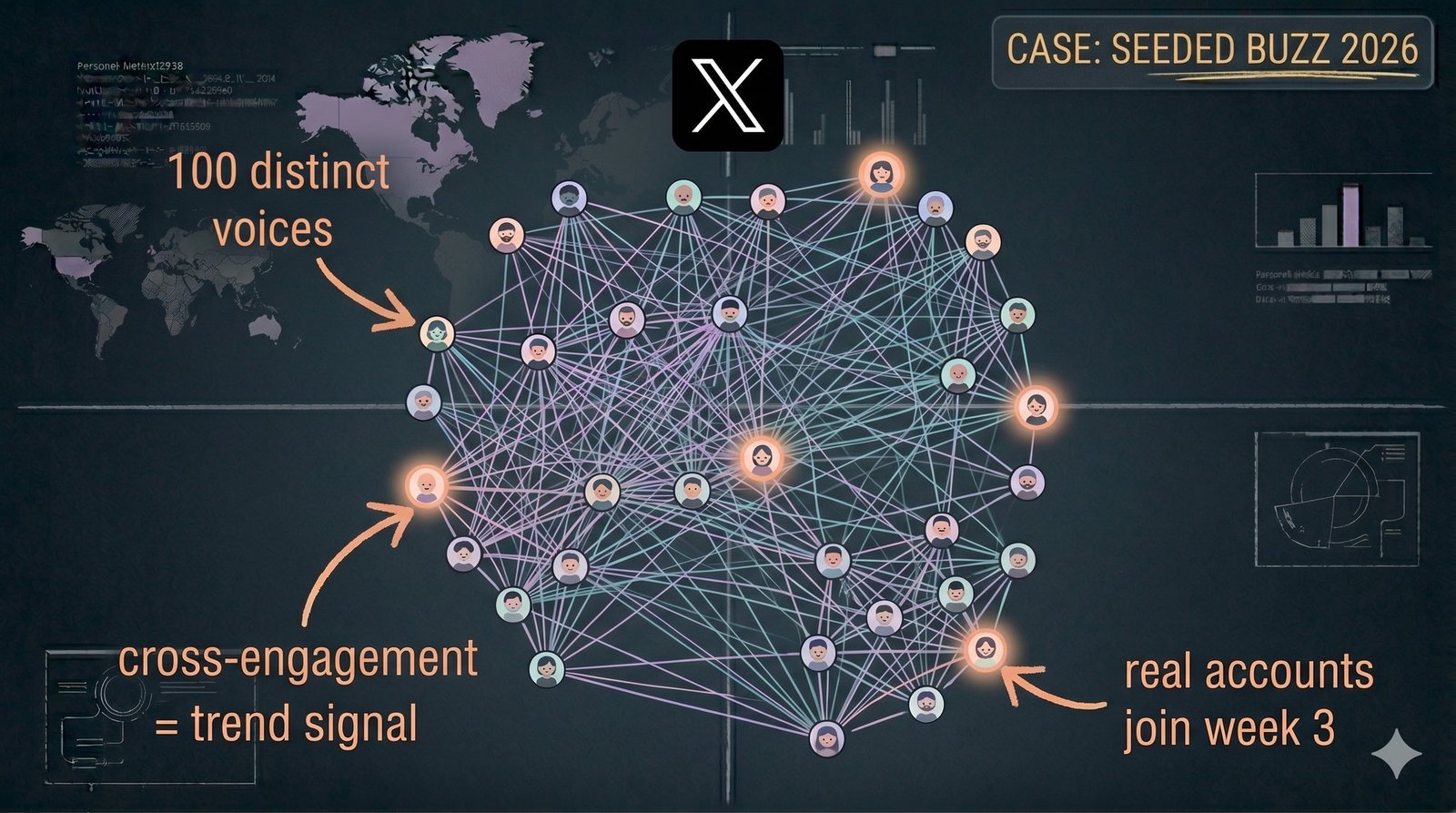
It rewards many independent accounts clustering around the same topic in a tight window, with cross-engagement between them (quotes, replies, references). Volume from few accounts gets discounted as a coordinated campaign. Variance in framing and language matters more than raw post count. The algorithm and CoinMarketCap's AI ranking use almost identical signal logic.
What's the difference between X Shilling and X Influencer marketing?
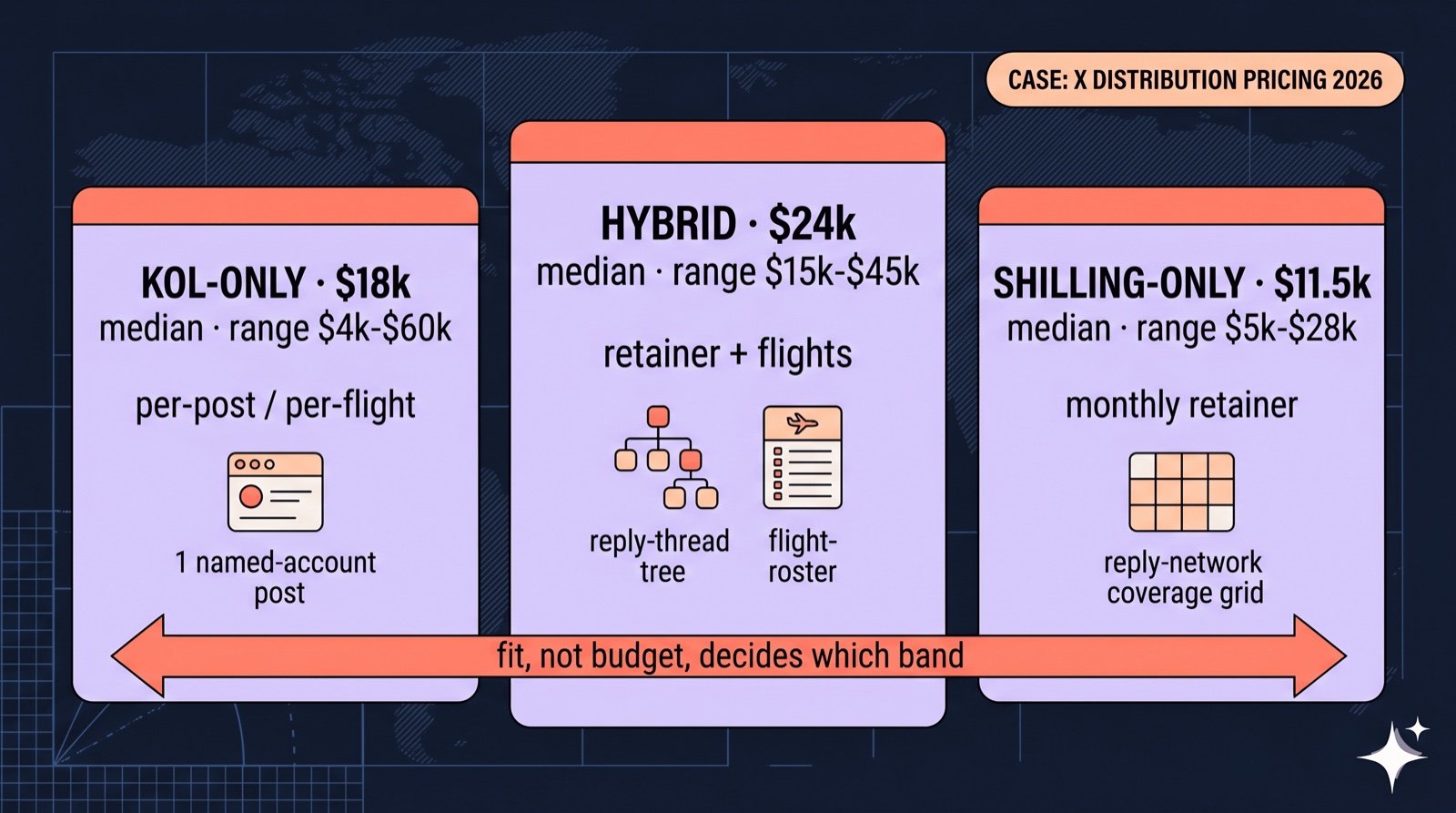
Shilling produces volume and density: many independent voices making a category trend look real. An influencer is one authority voice that took 12 months to grow. Shilling makes people think everyone is talking about your project. An influencer produces the post that ends the argument. Run shilling for category-trend density, an influencer for category-defining authority. They work well together.
Does the same mechanic work on Meta Threads?
Yes, and arguably better right now. Threads' ranking signals are very close to X's (independent voices plus cross-engagement), but the feed is younger, the bot filter is less mature, and category-trend slots are largely unclaimed. The required pool size to produce the cluster signal is smaller, so a parallel Threads operation hits density-of-voice at lower cost than a comparable X campaign.
How long does it take to build presence on X?
For a seeded narrative campaign with an existing resident pool, around 14 days for real accounts to start picking up the framing. For an authority influencer arc started cold, 9 to 12 months of consistent posting in a defined niche before the voice has real weight. The two operate on very different timelines and produce different outcomes.